
Home / About
About Windham County Generators
When the grid goes down in Windham County, the consequences stack up fast. A lost utility line does not just darken the lights. For most homes here, it also shuts off the well pump and kills the boiler, leaving the sump pit unprotected as well. The house that was comfortable an hour ago is now cold, dry, and dark, and it may stay that way for days.
Windham County Generators focuses on one trade: standby power for homes in this county. That narrow focus matters because the right backup power setup depends on knowing the house and its loads, right down to what the household cannot afford to lose. A generator that is undersized trips under load. One that is oversized costs more to buy and more to run over its lifetime. Neither outcome is acceptable, which is why every job starts with a real load assessment rather than a rule-of-thumb estimate.
Not every home needs a whole-house standby unit. Some households are better served by a portable generator connected through a properly installed interlock and inlet. That is an honest answer, and it is the one customers get when it fits. The goal is a backup power plan that matches the actual house and the actual budget, whether that means a fully automatic standby system on propane or a code-compliant interlock on a portable unit the homeowner already owns.
Services cover the full range of what a home in this county needs: whole-home standby generator installation, automatic transfer switch installation, generator sizing and load assessment, propane fuel supply and tank sizing, portable generator interlock and inlet installation, and annual maintenance plans. Repair and diagnostics are available when something goes wrong. Everything is done in Windham County, for homes in Windham County.
Our story
Why standby power in Windham County
Rural Vermont is not a forgiving place to lose power in February. Many homes here rely on a well for all their water, which means no electricity equals no running water, no toilet, and no way to fill a pot on the stove. Add a boiler that needs power to run its controls and circulator pump, and a winter outage becomes a genuine emergency within hours.
Windham County Generators was built around that reality. The business serves this county specifically, which means every job involves the kind of house that shows up here: older homes on wells, steep driveways, propane heat, and neighbors who may be miles away. Understanding what is actually at stake in a local outage is what shapes how jobs get sized and installed. It is not abstract. When a nor'easter takes out power for three days, the difference between a correctly sized generator and a wrong one is the difference between a functioning household and a call for help.
How we work
How a job gets done
The first step on any installation is a load assessment of the actual house. That means going through the real circuits and appliances, not applying a generic square-footage formula. Well pump, boiler, refrigerator, lights, medical equipment if there is any: each load gets counted and sized. From that list, the right generator size becomes a straightforward calculation rather than a guess.
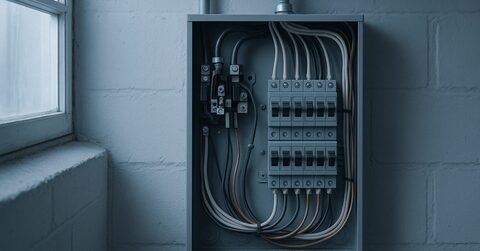
Once the size is confirmed, the equipment is matched to the fuel supply. Most homes in the county run on propane, and tank sizing is part of the planning so the generator can run through a multi-day outage without running dry. Transfer switch or interlock installation is done to code, and the system is tested before the job is closed out.
Annual maintenance plans for standby units cover the inspections and load tests that keep a generator ready when it is needed. Repair and diagnostics are available when something is not working right.
Who we serve
Who calls us
Most customers are homeowners in Windham County who have been through at least one long outage and do not want to go through another. Some are on wells and have lost water during a storm. Some heat with a boiler and have had pipes come close to freezing. Some have a family member who depends on powered medical equipment and cannot afford any uncertainty about the power supply.
Others are buying or renovating a home and want backup power built into the plan from the start rather than retrofitted later. A few already own a portable generator and want it connected safely through an interlock instead of running extension cords or, worse, backfeeding the panel. Whatever the starting point, the recommendation follows from what the household actually needs to keep running.